75-Minute Debate (16 April 2026)
To view this section on video, click here and start play at 11:44:05 AM.
Policies of Federal NDP Leader
The Assembly was debating the following motion moved by Daryl Harrison (Sask Party - Cannington):
That this Assembly reject the policies of the federal NDP leader, Avi Lewis, including his positions to all new fossil fuel developments, his Leap Manifesto, and his plans to nationalize sectors of the Canadian economy, as a direct threat to Saskatchewan’s resource sector, workers, and communities.
Mr. Keisig: — Well thank you, Mr. Speaker. Always a pleasure to enter into 75-minute debate, like the members opposite have said. You know, NDP supporters are calling it a truly historic victory. However, many people in Saskatchewan view the 2026 NDP convention as a direct threat to Saskatchewan’s economy, our resource sector, our workers, and communities all across the province.
For Saskatchewan, an NDP leader like Avi Lewis and all that he stands for threatens our potash, our uranium, our oil, and future investments. This could set us back to a time before 2007, risking our economic growth and prosperity.
Mr. Speaker, let’s just take a minute and examine Avi Lewis’s resume. The Leap Manifesto was a list of themes and demands that would cause complete economic ruin in this province and nation by eliminating fossil fuels completely. Other areas touched on are localized agriculture and food systems, progressive taxation to fund this fiasco — oh, manifesto; my apologies, Mr. Speaker — and the expiration of universal basic income, to name a few off the list.
I want to start with discussing the Leap Manifesto and Mr. Lewis’s opposition to all things fossil fuels. Essentially, Mr. Speaker, fossil fuels are bad; solar heat pumps and other alternatives are good. Like let’s just think about this. What is the harm in getting rid of fossil fuels? Well for starters, our entire society is based on the availability of energy, whether it’s gasoline for your car or natural gas to heat your home.
It is this readily available, affordable, dense energy that has dramatically changed everyone’s lives. Every generation lives a better life than our parents. We live a better life than our grandparents, our great-grandparents, and on, Mr. Speaker, largely due to affordable, reliable, dense energy.
Saskatchewan relies on energy production to be a self-sustaining community. And those exports create thousands of good jobs and bring billions in revenue to provincial coffers, and that funds our health care, our education, and all of the social programs all across the province, Mr. Speaker. Oil and gas, agriculture, mining, forestry are all foundational industries of our province, but not one of them could operate efficiently without oil and gas to power them.
The thing is the opposition can say they suddenly changed their core values and belief system regarding pipelines or any of Saskatchewan’s energy production, but I don’t think it’s quite like that, Mr. Speaker. They are already being faced with a lot of pressure from members within their own party to side with Mr. Lewis. Let’s be clear, their sudden change in beliefs is fooling no one. It’s the same old NDP caucus that blocked any type of growth in this province for decades.
Transitioning from fossil fuels at the rate that Avi Lewis wants — which is almost instant — will no doubt lead to job losses and economic instability. There is no way around it. Mr. Speaker, it 100 per cent would be the case. And job numbers are not just statistics, Mr. Speaker. These are real families, paying for real mortgages, real small-business owners trying to keep their doors open. Young families who want to stay in rural Saskatchewan because they prefer the small-town pace and life, and thankfully opportunities exist that allow them to stay in many of their hometowns.
I’m curious as to what the opposition thinks, how their new leader can explain how this province would fund health care, education, and every other government program that we provide. You cannot build a strong Saskatchewan by pulling the rug out from Saskatchewan workers or Canadians.
The Leap Manifesto would have detrimental impacts on Canada, discouraging pipelines and resource development. Avi Lewis and the NDP party truly have no big-picture understanding of what these policies would do to the country, do to the province, do to the communities, and do to the families all across Saskatchewan.
It would be no surprise that investments would be pushed out of Canada and Saskatchewan, making this province less competitive on a global stage. We would have a greater reliance on foreign energy, Mr. Speaker, which, you know, if members opposite are truly concerned about environmental standards, how can they justify relying on energy from other countries that are not as environmentally sustainable as we have in Saskatchewan? Never mind the social standards coming from our competing nations.
So much of our everyday lives happens thanks to the energy sector. We do provide environmental standards we can be proud of, but I guess according to some members, it’s easier to pretend that if we get foreign energy from elsewhere, it magically becomes cleaner. On this side of the House we keep our feet planted in reality, Mr. Speaker.
The manifesto lacks clear execution plans. Transitions as strong as the Leap Manifesto — or Mr. Lewis’s rebranding, the Green New Deal — cannot physically or economically happen. Entire communities could face large declines in population and loss of service. Kind of reminds me of what my hometown went through growing up in the NDP years, Mr. Speaker. Declining services in health care, attack on rural Saskatchewan, school closures, and job loss — it was a very challenging time.
You know, I find it ironic, Mr. Speaker. The Leader of the Opposition shouts from the rooftop about cutting costs for power and their power plan. Do you know how high, devastatingly high, the cost would be if we had Avi Lewis as a prime minister? It’s bad enough that he’s now the leader of the NDP, and it’s critical — and I want this on the record, Mr. Speaker — each NDP federal member is also an NDP provincial card-carrying member. It’s part of their constitution, Mr. Speaker.
Make no mistake, Mr. Speaker. We’re going to be able to see the potential impact first-hand by observing Manitoba where their premier appeared alongside Mr. Avi Lewis, illustrating the influence and a possible direction Saskatchewan could take under NDP leadership. Saskatchewan people are watching.
The member from Mount Royal, Mr. Speaker, was talking about equalization and everything else. And it’s very important to note Manitoba’s budget was still in deficit with a $5 billion equalization payment coming from the federal government. Elections, Mr. Speaker, are always about choice, and Avi Lewis and the NDP party are not a good choice for Saskatchewan people.
Mr. Speaker, let’s just zoom out a bit and look at Canada as a whole. Canada is one of the leading energy producers in the world. We have some of the strongest environmental and labour standards around the globe. This truly matters because Canada was . . . to have to reduce our energy production here, we have to look at what happens in other countries. The energy sector will not disappear overnight. If Canada decreases production, who will step in?
This is the same scenario I spoke about previously, zoomed in on Saskatchewan. We’ll be forced to go to countries that do not share our values, do not share our worker safety, and do not share our environmental protection. Companies would invest outside of Canada. There’s no arguing that. We see these things happening all over the world. Companies leave, those jobs leave, our strong economy struggles, and that all trickles down to families all across Saskatchewan, Mr. Speaker. Public services, health care, infrastructure will all become weaker.
I see I’m running short on time, Mr. Speaker, but I want to talk about one other thing. Mr. Avi Lewis seems very fond of the idea of government-run grocery stores, and he has this theory that it’ll help affordability by having government-run grocery stores. Well, Mr. Speaker, I believe a little bit of competition encourages prices to remain lower, improves quality of groceries, and caters to what consumers want in their grocery stores. When competition is reduced, incentives are removed. The taxpayer would be in charge of the operational costs, Mr. Speaker, and all the costs of running the retail store would exist.
We already have such an outlet, Mr. Speaker; it’s called a co-op. I take my mother to the Fort Qu’Appelle Co-op grocery store all the time, Mr. Speaker. She enjoys the store, knows where everything is. And I also attend their annual general meeting and see the books, and it is in incredibly tight margins with very, very low rate of returns, Mr. Speaker.
Just on closing, Mr. Speaker, I always like to think I’m a true student of history. Sir John A. Macdonald’s vision of a transcontinental railroad at the time was controversial, but his vision has allowed the country of Canada to grow and become the nation we all love. Just imagine a nation, Mr. Speaker, without that railroad.
And that’s what pipeline infrastructure would bring to the country of Canada. It would bring us together. It would provide us energy security. It would provide funding for all of the social programs that we have come to enjoy as a nation.
And Mr. Speaker, I will be supporting the motion brought forward by the member from Cannington and look forward to more debate. Thank you, Mr. Speaker.
After 65 minutes of debate, there is a 10-minute question and answer period. The following section begins at 12:05:40 in the video link provided above.
Nicole Sarauer: — Thank you, Mr. Speaker. I have a question for the member from Last Mountain-Touchwood. Now we want to know how he explains to his constituents that he’s asking them to pay higher bills for worse, less reliable power generation.
Travis Keisig: — Well thank you, Mr. Speaker. And I really appreciate the opportunity to talk about Saskatchewan’s affordability plan. Our energy security strategy is focusing on keeping 1,400 people — good jobs all across Saskatchewan; Estevan and Coronach — working hard providing reliable baseload electricity to each and every person across Saskatchewan, to each and every industry across Saskatchewan. We’re looking forward to more of this plan coming out, Mr. Speaker, and it is a very, very good plan.
. . .
Trent Wotherspoon: — Mr. Speaker, on this side we stand fiercely independent in support of the people of this province, in this beautiful province. We’ll stand up against any leader in Ottawa when they’re not acting in our interest.
Pierre Poilievre called for tariffs to be placed on Chinese EVs, which of course devastated our canola sector and producers, that was then imposed by Trudeau. It continued to be supported by Poilievre all the way through. We stood up, Mr. Speaker, and we called that out, stood up for producers in this province while they paid the price.
Why would the member of Last Mountain not stand up, fight back, and stand up for the producers he represents?
Travis Keisig: — Thank you, Mr. Speaker, and I want to thank the member opposite for the question. You know who I’m going to stand up for? I’m going to stand up for the Premier of Saskatchewan going over to China not once — twice, Mr. Speaker — getting a deal done for Saskatchewan producers in my constituency, my daughter, her fiancé. Getting a deal for canola done. That’s who I’m standing up for. That’s who I’m supporting is our Premier. Thank you, Mr. Speaker.
. . .
Aleana Young: — Thank you so much, Mr. Speaker. I too have a question for the member from Last Mountain-Touchwood. During your time as Minister of Environment, how did you justify to your constituents, your colleagues, and the province of Saskatchewan that it was you who was responsible for the legislation, the implementation, and the collection of industrial carbon pricing dollars on industry, on SaskPower, and the people of Saskatchewan?
Travis Keisig: — Thank you, Mr. Speaker. There is not one person across Canada that has been more against carbon taxes than our Premier, the Premier of Saskatchewan. We took it to the Supreme Court of Canada, Mr. Speaker. We took it to the highest court of the land, challenging that ruling. We took it there, and we are very proud of the hard work we were doing.
You know, the question from the member from Regina South Albert, she’s talked a lot about pride, you know. And that was very good to see, Mr. Speaker. Is she proud of the NDP’s record of always receiving equalization payments in the past? Is she also proud of the NDP never winning a Grey Cup when the NDP’s in power?
Back to 2025/2026 Session
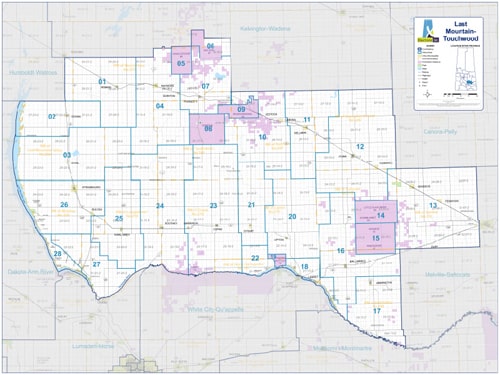
The map of constituency.
MLA Office
Constituency Assistant: Tina Knowles
PO Box 928
110 Elgin Street
Balcarres, SK
S0G 0C0
Phone: (306)-334-3444
Email: mla@traviskeisig.ca